
800 Volts for the Union Jack: What the Gen6 Battery Means for MINI.

Since entering the electric era in 2020, MINI has been tightly bound to one concept: compact, agile, front-wheel drive. The Cooper SE, Aceman, and Countryman SE all run on the UKL platform – the architecture MINI traditionally shares within the BMW Group with the 1 Series, the 2 Series Active Tourer, and the X1. The formula is proven, but technically it's already been overtaken by BMW's next generation.
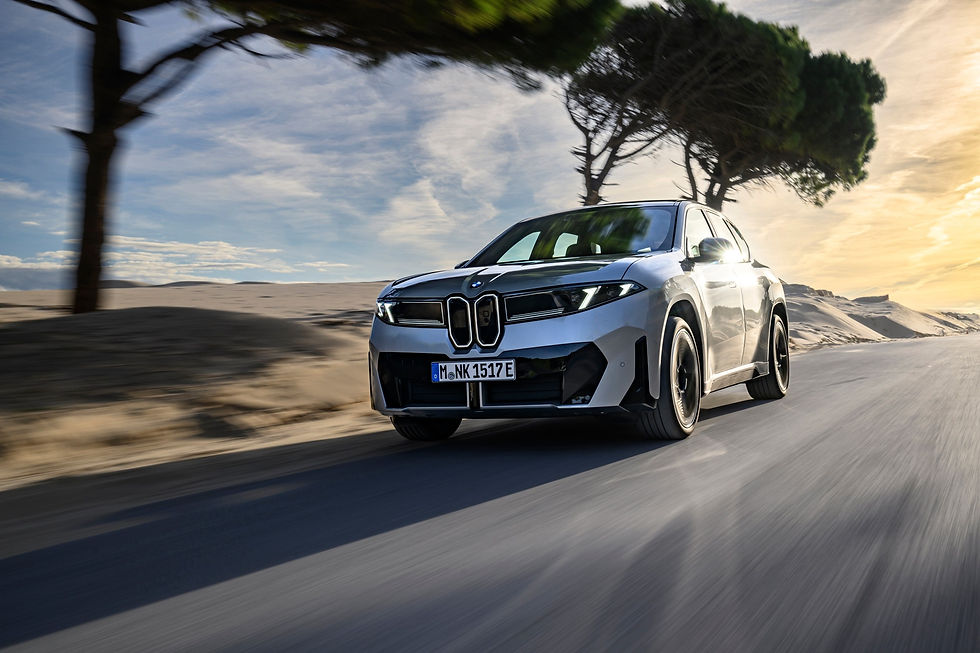
Because while the iX3 and i3 have long been running on the new Gen6 architecture with 800-volt technology and round cells, MINI is still built on the previous cell chemistry and 400-volt base. The leap awaiting the brand is correspondingly large.
The shift: round cells, 800 volts, and a change of course on the drivetrain
The next MINI generation is set to move onto the BMW Group's Gen6 electric platform – including the new round cells already used in the iX3 and i3. But the biggest shift isn't the cell itself; it's the drivetrain concept. Since BMW consistently designs its Gen6 platform around rear- or all-wheel drive, the next MINI generation is likely to move away from front-wheel drive as well.
BMW board member Joachim Post summed up the goal to "Autocar": the aim is to enable "pure driving fun." For a brand whose core identity has always been the go-kart feeling, a switch to rear-wheel drive would actually be closer to the original MINI promise than today's front-driver.
Why the drivetrain change matters so much
The scope of this step shouldn't be underestimated. Since BMW's acquisition of MINI in 2000 – and really since the very first MINI in 1959 – front-wheel drive has been the brand's defining technical feature. Transverse engine, power to the front wheels: that's always been the formula that set MINI apart from its rear-wheel-drive BMW siblings. A switch to rear-wheel drive is therefore not an ordinary platform update, but a break with more than six decades of brand tradition.
In terms of driving dynamics, this would bring concrete advantages: better weight distribution from eliminating the drive shafts at the front axle, more precise turn-in without drivetrain influences on the steering, and the possibility of a true all-wheel-drive system with variable torque distribution instead of a hang-on all-wheel-drive system bolted onto a front-driver. This would underscore exactly the "go-kart feeling" MINI has advertised for decades – just using the drivetrain layout logic BMW itself has always used for its sporty vehicles.
The closeness to the X1 and 1 Series
The timing of this switch is also interesting when it comes to the group's sister models. Currently, MINI shares the UKL platform with the BMW X1 and BMW 1 Series – both also front-drivers, or all-wheel-drivers built on a front-drive base. All three model lines technically sit in the same toolkit, which has provided synergies for years in engines, electronics, and manufacturing (the X1 and Countryman, for instance, are both built in Leipzig).
Should MINI now switch to the rear-wheel-drive Gen6 architecture, this shared path would diverge, at least for the electric versions: the X1 and 1 Series would likely remain on their established, front-drive-based platform for now, while MINI would move technically closer to the large Neue Klasse models than to its previous group siblings. That would be a remarkable reversal – of all brands, the most compact BMW brand would break away from the X1 and 1 Series in drivetrain terms and instead inherit the architecture of the i3, iX3, and iX5. Whether and how long the X1 and 1 Series themselves will have to wait for a rear-wheel-drive future is not yet known.
The technical advantages in detail
What the new platform concretely brings matches what we already know from the iX3 and i3:
Charging speed: around 30 percent faster than the current generation
Range: over 30 percent more thanks to the higher energy density of the Gen6 round cells
Cell costs: noticeably lower than with the previous cells, thanks to the new cell chemistry and cell-to-pack construction
For MINI buyers, this would mean shorter charging stops, greater everyday usability, and – provided BMW passes on the cost advantages – more attractive entry-level prices for the electric models.
Where this fits within the group: its own derivative rather than a 1:1 platform
Important for understanding this: MINI is not getting a license for the pure Neue Klasse architecture used by the iX3 and i3. BMW has explicitly ruled out opening up the platform to third parties. Instead, MINI will receive a brand-specific derivative of the Gen6 technology – with its own package and its own tuning, but on the same technological foundation.
MINI is also likely to benefit beyond the drivetrain: BMW has announced that with the Neue Klasse, it's bringing infotainment in particular to "a whole new level." Carrying these software and interface concepts over to MINI seems a natural step – even though the iconic round OLED central display will, in all likelihood, remain as a design signature.
Uncertainties: timeline and location question still open
The transition isn't entirely free of question marks. BMW has halted production of electric MINI models in Oxford – uncertain trade policy and looming tariffs are currently complicating the implementation of these plans. That could also affect the timeline for the next MINI generation. A fixed model year for the platform switch has not yet been officially confirmed.
The switch to Gen6 round cells and the 800-volt architecture would be the most radical technical shift for MINI since it entered the electric era. From front-wheel drive to rear-wheel drive, from old cell chemistry to state-of-the-art round-cell technology – the brand would move technically closer to its own brand identity than it is today. Exactly when this step will come remains open for now. What's certain: anyone waiting for MINI's next big move should keep an eye on developments around the Neue Klasse.
Meine Blog Artikel erstelle ich aus folgenden Quellen und Hilfsmittel:
Quellen: BMW Press Group, Google, Instagram, Erfahrungen aus dem Auto Gewerbe
Hilfsmittel: Für die Grammatik der Texte nutze ich Google Gemini und Claude


Comments