
Heating or Cooling: When Does an EV Battery Lose the Most Range?
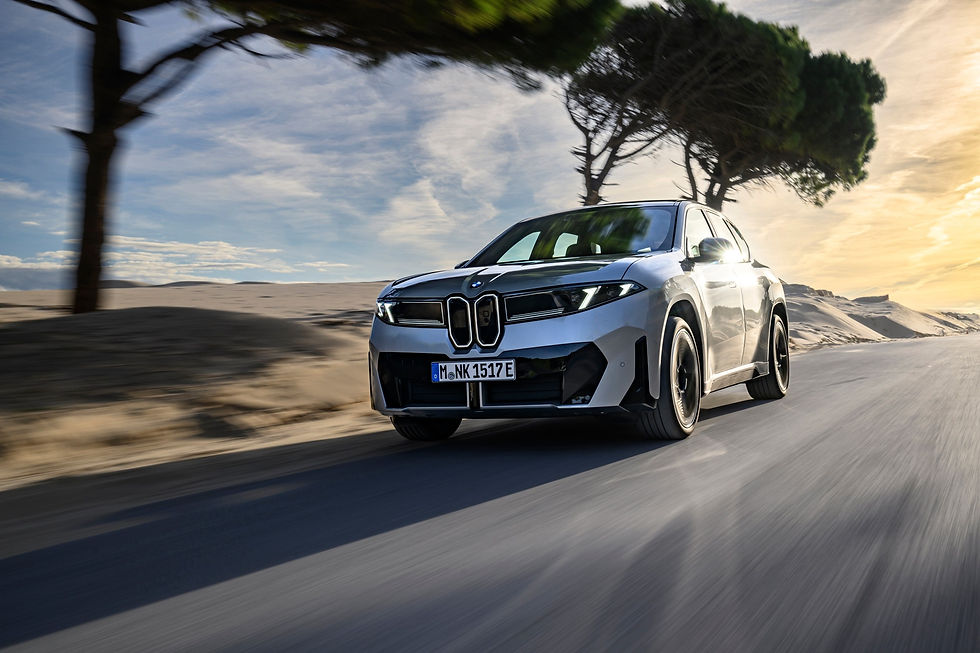
Anyone driving an electric vehicle knows the question: how much range does the air conditioning really eat up in summer – and how much does heating cost in winter? The answer is clear, but not necessarily intuitive. We've gathered the current data and also show what BMW's new sixth-generation (Gen6) high-voltage battery in the Neue Klasse changes about it.
The battery's comfort temperature
A lithium-ion battery operates most efficiently at around 21.5 degrees Celsius. Actual performance deviates from this optimum both above and below that temperature – the vehicle then has to actively regulate the battery's temperature, which costs energy that would otherwise be available for propulsion. What matters here: a combustion engine provides waste heat essentially for free, while an electric car has to pay for every degree of comfort out of the battery itself.
Cooling in summer: noticeable, but moderate
In hot weather, the effect turns out smaller than many would expect:
At around 40 degrees ambient temperature, the average range loss is about 20 percent.
To keep the cabin comfortable, the air conditioning needs on average 1.3 to 1.5 kW of power – roughly 2 percent of battery capacity per hour.
Even after eight hours in summer traffic jams with the air conditioning running continuously, the measured loss was around 16 percent of the battery's charge.
With moderate cooling needs (around 25 degrees), often just 0.5 to 1.0 kWh extra per 100 kilometers is enough.
The reason for the manageable effect: the air conditioning essentially works like a heat pump and is therefore comparatively efficient. In addition, the battery sits in the underbody on practically all production vehicles – protected from direct sunlight.
Heating in winter: the real range killer
In cold weather, the math looks quite different:
At minus 10 degrees, real-world range drops to only around 60 percent of the rated value.
When warming up in city traffic, cabin heating alone can account for up to 35 percent of total energy consumption after just one hour.
In extreme cases, range losses of up to 40 percent have been measured – without cabin heating, the loss in the same test was only around 12 percent.
PTC heating elements work like an electric immersion heater with around 3 to 6 kW power draw – nearly 100 percent efficiency, but correspondingly high consumption.
Bottom line from the raw numbers: heating costs significantly more range on average than cooling – often twice as much or more, depending on outside temperature and driving profile.
Cooling at approx. 40°C: approx. 15–20% range loss
Heating at approx. 0°C to −10°C: approx. 30–60% range loss
What the BMW Gen6 battery changes about this
With the Neue Klasse, BMW is introducing the sixth generation of its eDrive technology – including a completely new high-voltage battery with the BMW round cell. Three points are especially relevant for our topic:
1. Heat pump as standard
Unlike conventional PTC heaters, a heat pump uses ambient heat to warm the cabin air – considerably more efficient than pure resistive heating. On the BMW iX3 50 xDrive, it comes fitted from the factory, not as an option.
2. Active battery preconditioning
The Neue Klasse brings the battery up to its target temperature before charging or before cold drives, rather than only regulating it on the go. This reduces inefficient reheating phases while driving.
3. More energy density as a buffer
The Gen6 round cell offers around 20 percent more energy density than the previous prismatic Gen5 cells, along with up to 30 percent more range and 30 percent faster charging. A larger starting buffer cushions cold-weather losses in percentage terms, even if they don't disappear entirely.
Real-world testing confirms the pattern: a winter test of the BMW iX3 50 xDrive at temperatures around freezing showed that even with a heat pump and preconditioning, the battery is outside its comfort zone under such conditions. The 1,000-kilometer route was still doable in under nine hours – so the fundamental effect that "cold costs more than heat" still holds true even with the latest BMW battery technology, just at a noticeably higher level than with older generations.
Practical tips for everyday use
Precondition the cabin while the vehicle is still plugged into the wallbox – that way, the energy for preheating or precooling comes from the grid instead of the battery.
Use seat and steering wheel heating instead of cabin heating where possible: it needs only around 75 watts, instead of 3,000 to 5,000 watts for heating the entire cabin.
Park in the shade in summer to ease the load on battery cooling.
Drive gently in hot weather, since abrupt acceleration heats the cells up faster and requires additional cooling power.
The physics stays the same whether with old or new battery technology: heating fundamentally costs more range than cooling, because, unlike a combustion car, an electric vehicle has no free waste heat available. BMW's Gen6 high-voltage battery with round cells, standard heat pump, and active preconditioning noticeably softens this effect – but it doesn't eliminate it. Anyone driving their Neue Klasse BMW in winter should still expect noticeable, if smaller, range losses compared to summer heat.
Meine Blog Artikel erstelle ich aus folgenden Quellen und Hilfsmittel:
Quellen: BMW Press Group, Google, Instagram, Erfahrungen aus dem Auto Gewerbe
Hilfsmittel: Für die Grammatik der Texte nutze ich Google Gemini und Claude


Comments