
Silent Lines, Full Workshops: What Really Happens at BMW When Production Stops for Summer.

The major Bavarian sites of Munich, Dingolfing, and Regensburg traditionally align their factory holidays with school holidays in the Free State of Bavaria, typically scheduling the production break for the second half of August. The Leipzig plant runs on a somewhat different clock: there, the summer break usually starts as early as mid-July, so the workforce is back at the lines sooner. At the motorcycle plant in Berlin, the break traditionally runs longer – around four weeks until mid-August, used specifically for conversions, inventory, and maintenance.
Factory holidays: tradition with a system
How long the break actually lasts depends heavily on the current order situation and the scope of upcoming technical adjustments. In years with especially high demand, BMW has previously shortened the factory holidays in order to deliver more vehicles with additional shifts. In summer 2025, it was the other way around: because of extensive preparations for the Neue Klasse, the production break at some sites ran notably longer than usual, at around five weeks – necessary for major structural and conversion work in body-in-white, vehicle assembly, and the paint shop.
What really happens during the break
While the general public mostly notices the empty parking lots and the quiet at the sites, the genuinely exciting processes are happening behind the factory gates during this time: production lines are retooled, new robotics and equipment are installed, software in production control is updated, and the entire logistics chain is realigned for new components and model variants. For a carmaker that introduces model updates, special editions, and entire generational changeovers on practically an annual rhythm, this is a permanent undertaking – and the production-free weeks in summer offer the largest contiguous window of time in the calendar year to do it.
2026 is a particularly exciting year for this
This year's summer falls into a phase where BMW is setting several major courses at once:
BMW i3 (NA0) at the Munich plant: the new, fully electric i3 based on the Neue Klasse architecture starts series production in Munich during the course of 2026 – a milestone for the home plant, as it marks the gradual farewell to classic combustion-engine manufacturing at the site.
Return of the 3 Series to Dingolfing: starting in the second half of 2026, the upcoming 3 Series generation (G50/G51) will no longer be built in Munich, but at the Dingolfing plant – where the large model lines, the 5, 7, and 8 Series along with their respective electric versions, are already produced. For Dingolfing, this means additional integration work on the lines, while Munich frees up its capacity for the Neue Klasse.
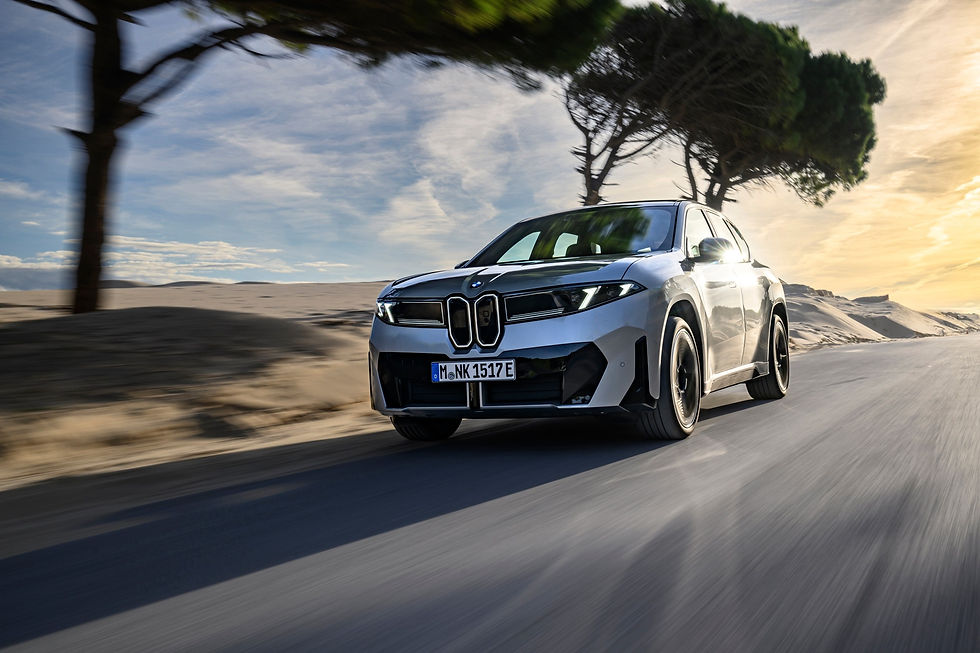
Neue Klasse ramp-up overall: following the start of the iX3 at the Hungarian plant in Debrecen in autumn 2025 and its market launch in Europe and the US in spring/summer 2026, the new electric architecture – with the sixth eDrive generation, 800-volt technology, and the new round cells – is increasingly spreading across the entire production network.
None of these changeovers can be implemented "on the side" while the line keeps running. They need time during which the affected lines stand still – and that's exactly the time BMW secures for itself with the factory holidays in the height of summer.
Quiet for us, but not for BMW
For us as a blog, that means: fewer new press releases, fewer spy-shot sightings – but also the certainty that during this time, the plants are laying the groundwork for everything awaiting us in new releases come autumn. When the lines start up again after the summer break, it's often the first real indication of how far preparations for the new model years have actually progressed – and whether milestones like the start of i3 production in Munich or the move of 3 Series manufacturing to Dingolfing are being met as planned.
Meine Blog Artikel erstelle ich aus folgenden Quellen und Hilfsmittel:
Quellen: BMW Press Group, Google, Instagram, Erfahrungen aus dem Auto Gewerbe
Hilfsmittel: Für die Grammatik der Texte nutze ich Google Gemini und Claude


Comments