
Why the New BMW X5 (G65) Is Heavier Than Its Predecessor.

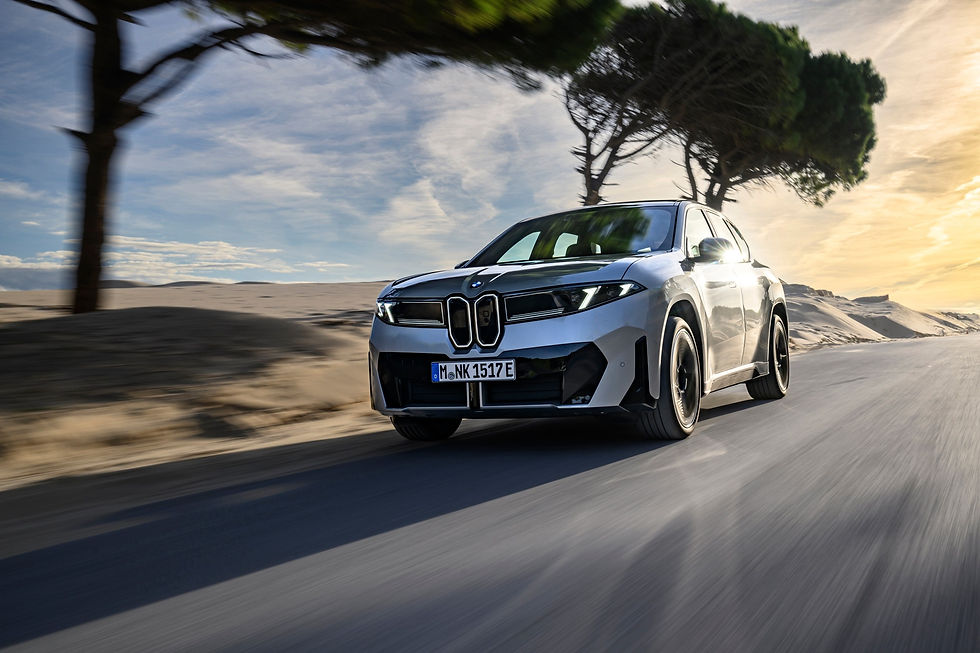
With its fifth generation, BMW has put the X5 on an entirely new technical foundation – and that shows on the scales.
The new X5 40d (G65) weighs approximately 2,355 to 2,430 kg according to current manufacturer figures, while the outgoing G05 xDrive40d tipped the scales at 2,200 kg (DIN) or 2,275 kg (EU). In short, that's an increase of roughly 150 to 230 kilograms. We took a closer look at where this extra weight comes from.
One Platform for Five Powertrains
The most important reason lies in the G65's very concept: for the first time, the X5 shares its body structure, suspension architecture, and mounting points with the fully electric iX5. Thanks to its 800-volt architecture and oversized battery, that model weighs a good 600 kilograms more than the base petrol version. To absorb this range of weight across a single body-in-white structure, BMW had to completely redesign the rear suspension and make the body overall stiffer and more robust. That adds noticeable weight even to conventional combustion models like the 40d – even though they carry no electric drivetrain of their own.
More Car, Literally
The G65 has grown compared to the G05: it's longer, wider, and rides on a wider track. More body surface automatically means more sheet metal, longer wiring harnesses, and more sound insulation – all factors that add up in kilograms long before the first litre of fuel goes into the tank.
Standard Equipment on a New Level
Another driver is the significantly more generous standard equipment:
Adaptive air suspension as standard, where it was still a paid option on the G05
Integral Active Steering with rear-axle steering
The new Panoramic Vision concept with a large 17.9-inch central display
Optionally available automatic doors, previously known from the 7 Series
An expanded 48-volt mild-hybrid system on the 40d with an additional electric motor and corresponding battery components
All of this brings genuine everyday comfort – but it also brings weight that simply wasn't there on the predecessor.
More Insulation, More Safety
Finally, rising expectations around acoustics and safety also play a role. To meet the refined NVH standard expected of the brand's Neue Klasse-inspired lineup, as well as current crash and pedestrian-protection requirements, the body structure was further reinforced.
Impact on Road Taxes in Switzerland and Germany
The G65's extra weight isn't just noticeable behind the wheel – it also shows up on the tax bill, though in very different ways in Switzerland and Germany.
In Switzerland, vehicle tax is a cantonal matter, and each canton sets its own calculation method. In cantons such as Bern, Basel-Landschaft, St. Gallen, or Appenzell, total weight feeds directly into the tax formula: the heavier the car, the higher the annual bill. In the canton of Zurich, the road tax is calculated from a combination of engine displacement and total weight – so a few hundred extra kilograms show up directly there as well. Other cantons, such as Aargau, Glarus, or Zug, have traditionally leaned more on engine displacement or taxable horsepower, though a shift toward weight-based models is visible there too: Aargau, for instance, is switching its entire road tax system to a calculation based on total weight and rated power as of 1 January 2026.
In Germany, by contrast, vehicle weight plays no direct role in the motor vehicle tax for passenger cars. The tax is calculated from engine displacement (per started 100 cm³, at a higher rate for diesels than for petrol engines) plus a CO2 component based on emissions above a tax-free threshold. Indirectly, though, the G65's extra weight still has an effect: a heavier car needs more energy to move, which tends to translate into higher fuel consumption and, in turn, higher CO2 figures – and those feed straight into the German vehicle tax.
Anyone eyeing the new X5 40d should therefore look a little closer depending on where they live: in many Swiss cantons, the extra weight hits the annual road tax bill directly, while in Germany it mostly shows up indirectly, via the CO2 balance.
The weight gain of the new X5 40d, then, is less about the diesel powertrain itself. It's the logical consequence of a multi-purpose platform that has to carry an 800-volt electric car from day one, combined with a larger body and considerably more technology and comfort as standard. And judging by early test drives, BMW has still managed to coax out convincing agility – proof that more weight doesn't have to mean less driving fun.
All figures are based on current manufacturer information and may still change before market launch in November 2026.
Sources: BMW Press Group, Google, Instagram, insights from the automotive trade
Tools: For text grammar, I use Google Gemini and Claude


Comments