
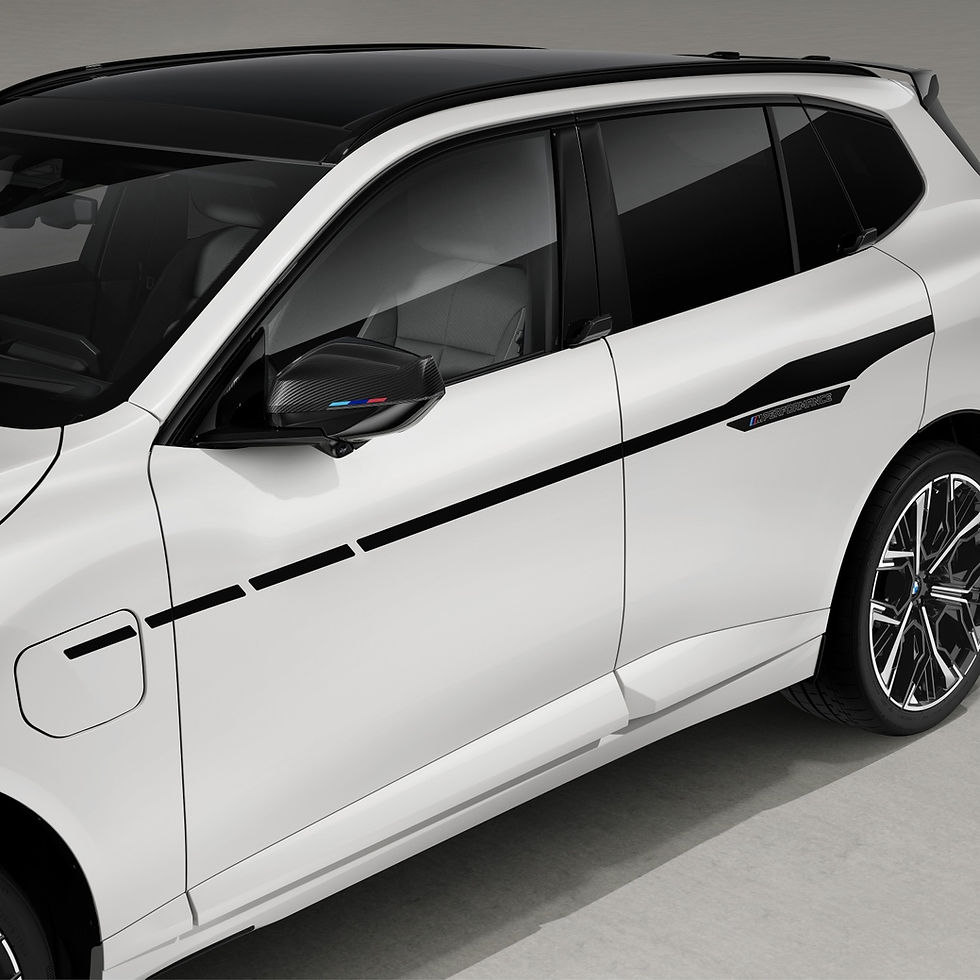
The new BMW iX5 Hydrogen Hits the Test Track - Enduring Heavy Strain.

The BMW Group is picking up the pace on its first series-production hydrogen model: current BMW iX5 Hydrogen prototypes are undergoing a comprehensive real-world testing programme. At the same time, the next build phase of the third-generation fuel cell system is starting at the Hydrogen Competence Centre in Munich, while preparations for future series production are already underway at the Austrian Steyr plant.
Focus on System Integration and Driving Dynamics
The current testing phase centres on validating the overall system under demanding environmental and operating conditions. Development teams are ensuring that every component works reliably together, while fine-tuning the complex control systems even under heavy load.
Crucially for the brand, the iX5 Hydrogen is meant to feel like a genuine BMW despite its fuel cell technology. Josef Hochreiter, Head of Hydrogen Vehicles at the BMW Group, already describes the interplay of fuel cell system, high-voltage battery and electric drive as highly mature.
Technically, the vehicle relies on a finely tuned interplay of:
Fuel cell system (third generation)
Electric motor
High-voltage battery
BMW Hydrogen flat tank
Energy Master as the central control unit of the high-voltage system
The Energy Master enables higher recuperation output, boosting overall efficiency. In terms of performance, development is targeting figures on par with the familiar BMW iX5 — a 0-to-100-km/h sprint in under five seconds is the goal.
Fuel Cell System Enters Its Next Build Phase
Alongside vehicle testing, the next prototype build phase of the third-generation fuel cell system is beginning at the Hydrogen Competence Centre in Munich. While the previous phase focused on the basic manufacturability of components and qualifying suppliers, the focus now shifts to finalising test methodology and further preparing for industrialisation.
Claudia Stephan, Head of Technology Development and Prototype Manufacturing for Fuel Cells at the BMW Group, sums it up: each build phase helps optimise processes and pass on the knowledge gained to the teams in Steyr, where series production of the fuel cell systems will eventually take place.
Steyr Prepares for Series Production
At the BMW Group Plant Steyr, the first steps toward industrialisation are already underway: initial test benches and production equipment have been set up, and employees are being trained in stages. The insights gained form the basis for the later production ramp-up. Additional system components are also being produced at the BMW Group Landshut site.
Hydrogen as a Complement to Electric Mobility
With the iX5 Hydrogen, the BMW Group is consistently pursuing its technology-open approach. Hydrogen is meant to complement battery-electric vehicles wherever long range, short refuelling times and maximum operational flexibility are required — for example for high-mileage drivers or in regions with sparser charging infrastructure. The targeted key figures:
Targeted range of up to 750 kilometres (WLTP) — binding consumption figures are not yet available for a development prototype
Refuelling time of under five minutes
Fully electric driving, locally emission-free
The third-generation fuel cell system is being developed together with Toyota Motor Corporation. Inside the cell, hydrogen from the tanks reacts electrochemically with oxygen from the ambient air, generating the electricity that powers the electric motor.
Once the iX5 Hydrogen launches as the BMW Group's first series-production hydrogen model, the then-new BMW X5 will offer customers a choice of five drive variants: battery-electric, plug-in hybrid, petrol, diesel — and hydrogen fuel cell.
Government Funding via "HyPowerDrive"
Development of the drivetrain and tank system for the BMW iX5 Hydrogen is being funded through the "HyPowerDrive" project under the IPCEI Hy2Move framework. The German federal government is providing 191 million euros, with the state of Bavaria contributing a further 82 million euros. Implementation is handled by project sponsor Jülich, coordinated by NOW GmbH.
With parallel real-world testing, the start of the next build phase in Munich, and preparations underway in Steyr, the BMW Group is showing that its hydrogen strategy is no niche side project — it's consistently heading toward series readiness. The iX5 Hydrogen could well become a genuine differentiator for the brand.
Meine Blog Artikel erstelle ich aus folgenden Quellen und Hilfsmittel:
Quellen: BMW Press Group, Google, Instagram, Erfahrungen aus dem Auto Gewerbe
Hilfsmittel: Für die Grammatik der Texte nutze ich Google Gemini und Claude

Comments